 Kamal Noori
Jun 14, 2026
A Good Product Does Not Sell Itself. That Belief Is Expensive.
ecommercestrategygrowth-systems
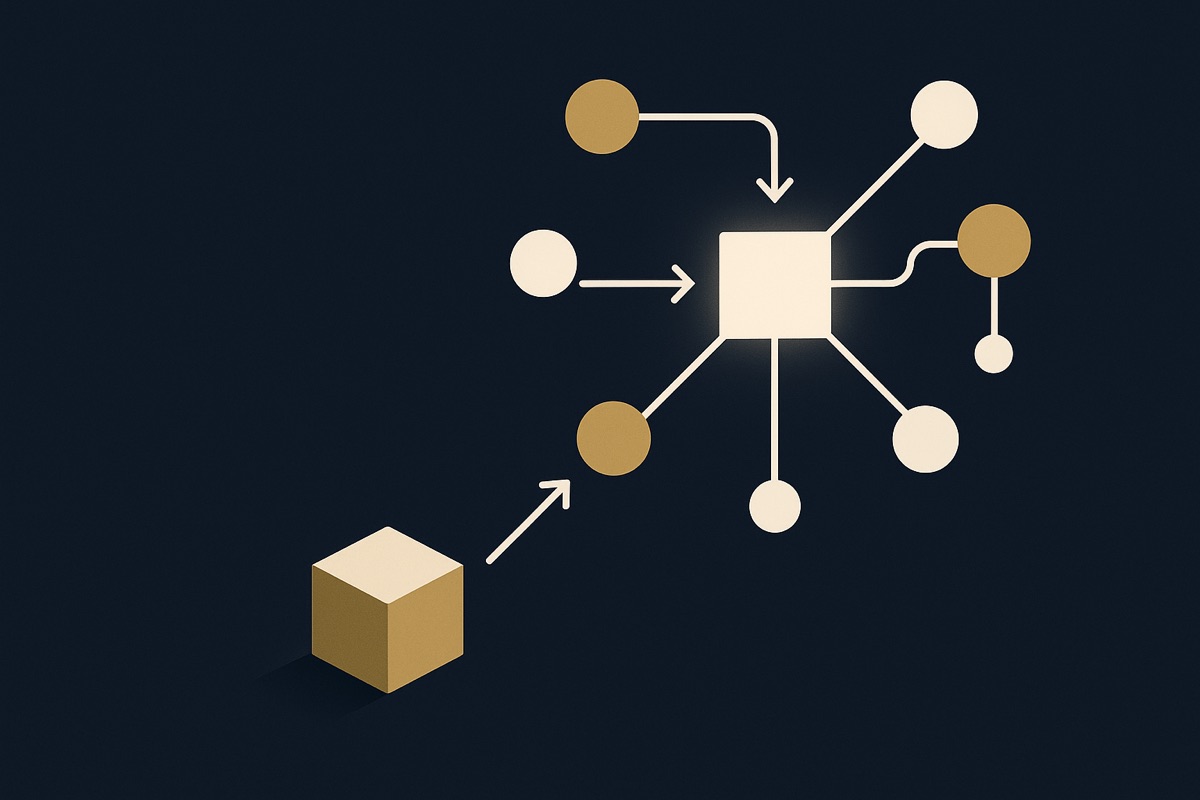
A good product does not sell itself.
It just dies more quietly than a bad one.
That belief is the most expensive lie in ecommerce, and I paid for it in full.
The short answer
No, a good product does not sell itself. Demand has to be created, captured, and converted, and none of that happens by accident. Product quality decides whether people come back. It does not decide whether they ever arrive. What sells a great product is a system: a way to get attention, hold it, and turn it into a transaction at a margin you can survive.
I learned this at 19, the hard way
My first store was real. The product was good. I had checked the reviews on competitors, I had handled units, I knew mine was better.
So I launched. And I waited.
I had built the whole plan around one assumption I never said out loud: that quality would do the selling for me. Put it online, people find it, people buy it. That was the strategy. That was the entire strategy.
Nobody came. Not because the product was bad. Because there was no mechanism pointing a single human at it. No traffic. No offer framing. No reason to act now instead of never. No way to bring back the few who did look.
I lost everything I had put into it. It was humiliating in the specific way that only self-inflicted things are. I had not been beaten by the market. I had skipped the market entirely and called it confidence.
That is when marketing stopped being a passion and became something closer to revenge. I decided I would learn the machine that I had ignored, and I would learn it well enough that it never happened again.
Why the belief survives
It survives because it feels like a compliment to your work.
“If it’s good enough, it’ll sell” lets you pour all your energy into the product and none into the part that scares you. It protects your ego. If the product is the only variable, then you are a craftsman, not a salesperson, and craftsmen are allowed to be above the grubby business of getting attention.
It also survives on survivorship bias. You hear about the product that “blew up on its own.” You do not hear that it had a founder posting daily for two years, a waitlist of 4,000 people, or a press contact who owed them a favor. The system was there. It was just invisible from the outside, which is exactly how good systems look.
And it survives because doing nothing is comfortable. Building a selling system means deciding who the customer is, what they get, why now, and how you reach them again. Every one of those is a place to be wrong in public. Waiting for the product to do it for you is a way to never be wrong, right up until you go to zero.
What a great product actually needs
Stop thinking “marketing” and start thinking “the path from stranger to repeat buyer.” A product needs a system that owns every step of that path.
You need a way to create demand. Cold audiences do not know they want your thing. Ads, content, organic reach, partnerships. Something has to manufacture awareness on purpose.
You need a way to convert it. A landing page that loads fast and says the right thing. An offer that removes the reason to hesitate. I have watched a client’s leads double from one change: their contact form took 9 seconds to load. The product was never the problem. The path to it was broken.
You need a way to measure it. Every untracked euro is a lost euro. If you cannot see where money enters and leaks, you are not running a business, you are running a slot machine with good lighting.
You need a way to bring people back. The first sale is the most expensive one you will ever make. The margin lives in the second, third, and tenth. Email, retention, the reason to reorder. A great product earns the repeat. A system makes sure you are there to collect it.
That is the difference between a product and a business. The product is the engine. The system is the car. An engine on the floor of a garage does not take anyone anywhere, no matter how good it is.
FAQ
Does a good product sell itself? No. A good product reduces refunds and earns repeat purchases. It does not generate the first sale. That requires demand creation and conversion, which are deliberate functions, not side effects of quality.
What about word of mouth? Doesn’t a great product spread on its own? Word of mouth is real, but it is an amplifier, not an engine. It scales whatever attention you already created. Zero customers refer zero people. You need the system to produce the first wave before referrals have anything to multiply.
I have a small budget. Where do I start? Start with the path, not the product. Make sure your page converts the traffic you already get, and that you are capturing emails so no visitor is wasted. Fixing leaks costs almost nothing and makes every future euro of ad spend worth more. Cheap marketing that wastes the traffic you paid for is the most expensive marketing there is.
How do I know if my problem is the product or the system? Look at the funnel. If people see it and do not buy, that is usually offer, page, or trust, all system. If people buy once and never return, that can be product. Most founders blame the product when the truth is nobody ever reached it.
The payoff
Quality keeps customers. It does not find them. The brands that win are not the ones with the best product in the room. They are the ones with the best product attached to a system that reliably puts it in front of the right people and converts.
Growth is not luck. It is a consequence. Build the machine that earns it.